Dalton Kincaid Has a Dawson Knox-Sized Problem in Fantasy Football

 Make us preferred on Google
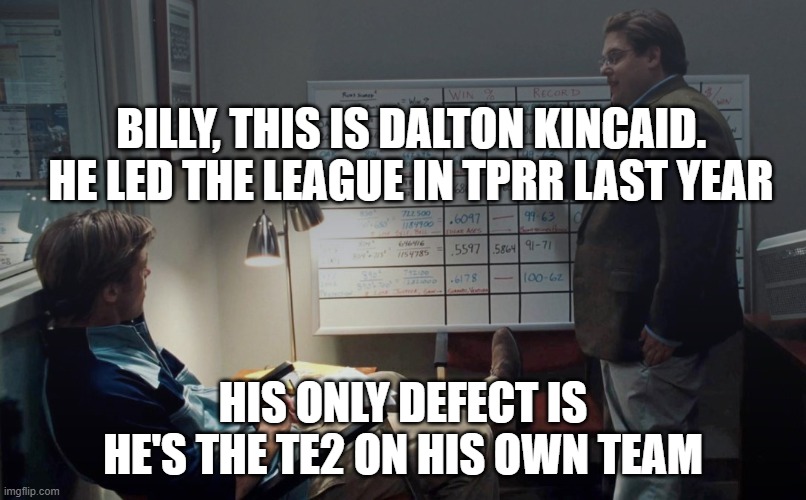
I recently finished my Most Predictable Tight End Stats article, and targets per route run (TPRR), catch rate over expected (CROE), and YAC per reception all popped up. And I think they collectively summarize what we care about in a fantasy TE. Can they separate on their routes and earn target volume (TPRR)? Can they actually make the catch (CROE)? And can they use their athleticism to do something dynamic with the ball in their hands (YAC per reception)?
Here’s where Dalton Kincaid finished in those stats last year among 33 qualifying TEs. He was 1st in TPRR, 4th in CROE, and 3rd in YAC per reception. Kincaid is currently going off the board as TE13 in 4for4’s Multi-Site ADP, at the end of Round 10. Sounds like a smash, right? And my answer to that is: maybe.
Click here for more 2026 Player Profiles!
And that’s because the most important non-ADP stat in the TE model was a simple one: receptions per game. And Kincaid was 22nd in that stat among the same 33 qualifying TEs. He’s excellent when he’s running a route, but he was 30th in routes per game in 2025. That was ahead of only Michael Mayer, Colby Parkinson, and Gunnar Helm. Just like Mayer, Kincaid is operating as the TE2 on his own team.
I think we have two realistic outs for Kincaid to smash his ADP. And they are through a Dawson Knox injury and/or the Bills actively trying to win games via the forward pass. Let’s start with Knox.
Dawson Knox Splits
The graph below shows TE routes per game on the x-axis and TPRR on the y-axis. And I’ve highlighted both Kincaid and Knox. While Kincaid is 1st in TPRR…Knox is 31st, ahead of only T.J. Hockenson and Cade Otton, a mainstay as a routes-only TE play. The problem is that Knox prevents Kincaid from getting a sufficient number of routes to be truly fantasy-relevant.
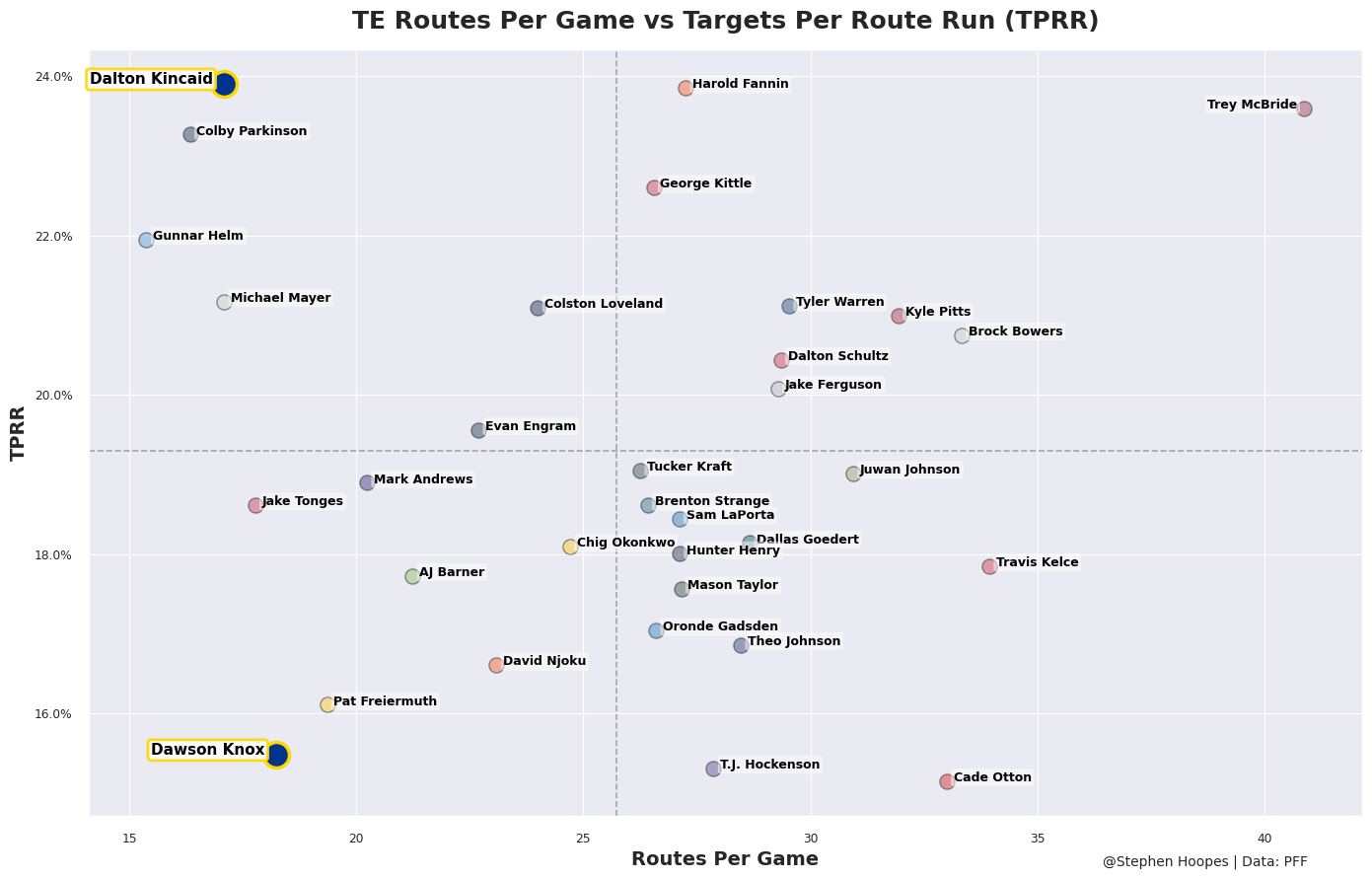
Kincaid and Knox ran the exact same number of routes per game in 1-TE sets last year, according to SIS. And my assumption is that the Bills just do not trust Kincaid as a blocker. Just as an example, Kincaid ranked 131st out of 142 TEs in PFF’s pass block grade last year. And so, things get even worse for Kincaid when the Bills run 2-TE sets, which seems counterintuitive on the surface. But Knox ran nearly double the number of routes in 2-TE sets per game compared to Kincaid last year. And that’s because the Bills opt to get Jackson Hawes in those sets instead of Kincaid.
Knox has been the picture of health the last two seasons. But he did miss Weeks 8 through 13 in 2023. We’ll have to take this with a large grain of salt because we’re going back three seasons. But during that stretch, Kincaid hit six or more targets in every game. His target high in any game during the 2025 season was six targets. And that’s partially because he ran 85% of the routes compared to the Bills’ WR1 during that stretch in 2023, a substantial increase over Kincaid’s route rate even before his injuries in 2025.
So, my suspicion is that if Knox were to miss time in 2026, the Bills would not be willing to rely on Hawes as their sole route-running TE in 1-TE sets. That they’d finally relent and let Kincaid be a near full-time player. And if I’m right, you’re going to want to play Kincaid those weeks. Especially if the Bills decide they actually want to pass the ball.
PROE Splits
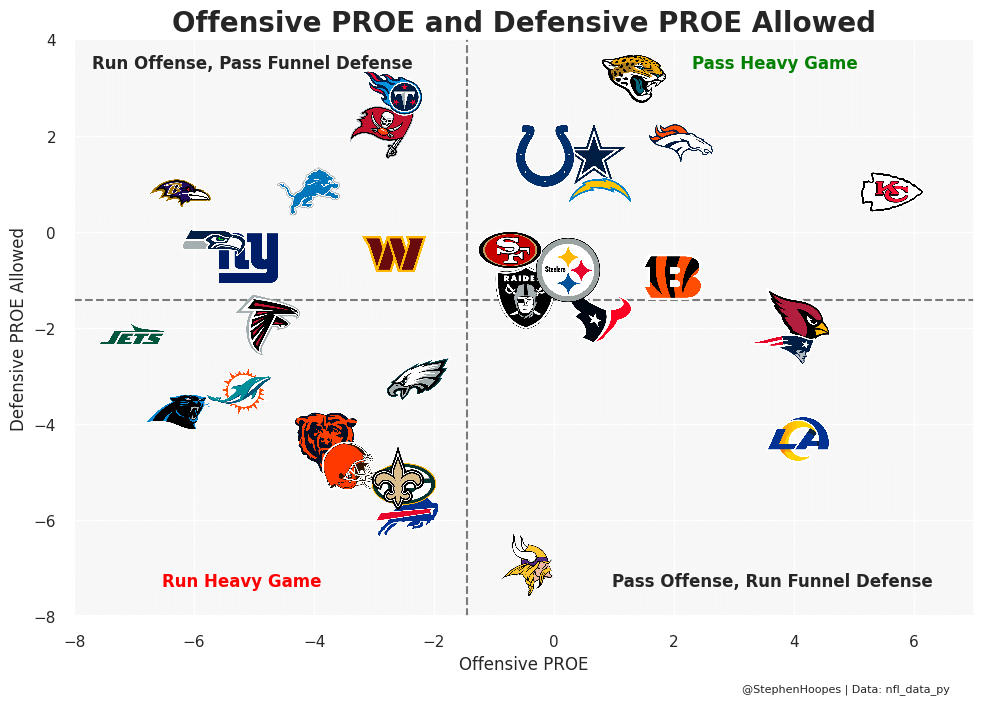
That brings us to the Bills’ pass rate over expectation (PROE) tendencies. The graph below shows offensive PROE on the x-axis. Alternatively, the y-axis shows how opponents attack a team’s defense. You’ll find the Bills in the bottom-left corner. They opt to run the ball about 2% more than expected, and opponents opt to run on their defense at the 2nd-highest rate in the league. And that’s because the Bills’ run defense was awful last year, ranking 31st in both rush EPA/play and explosive run rate allowed. That combination dragged the Bills’ offensive plays per game down to 16th despite their efficiency.
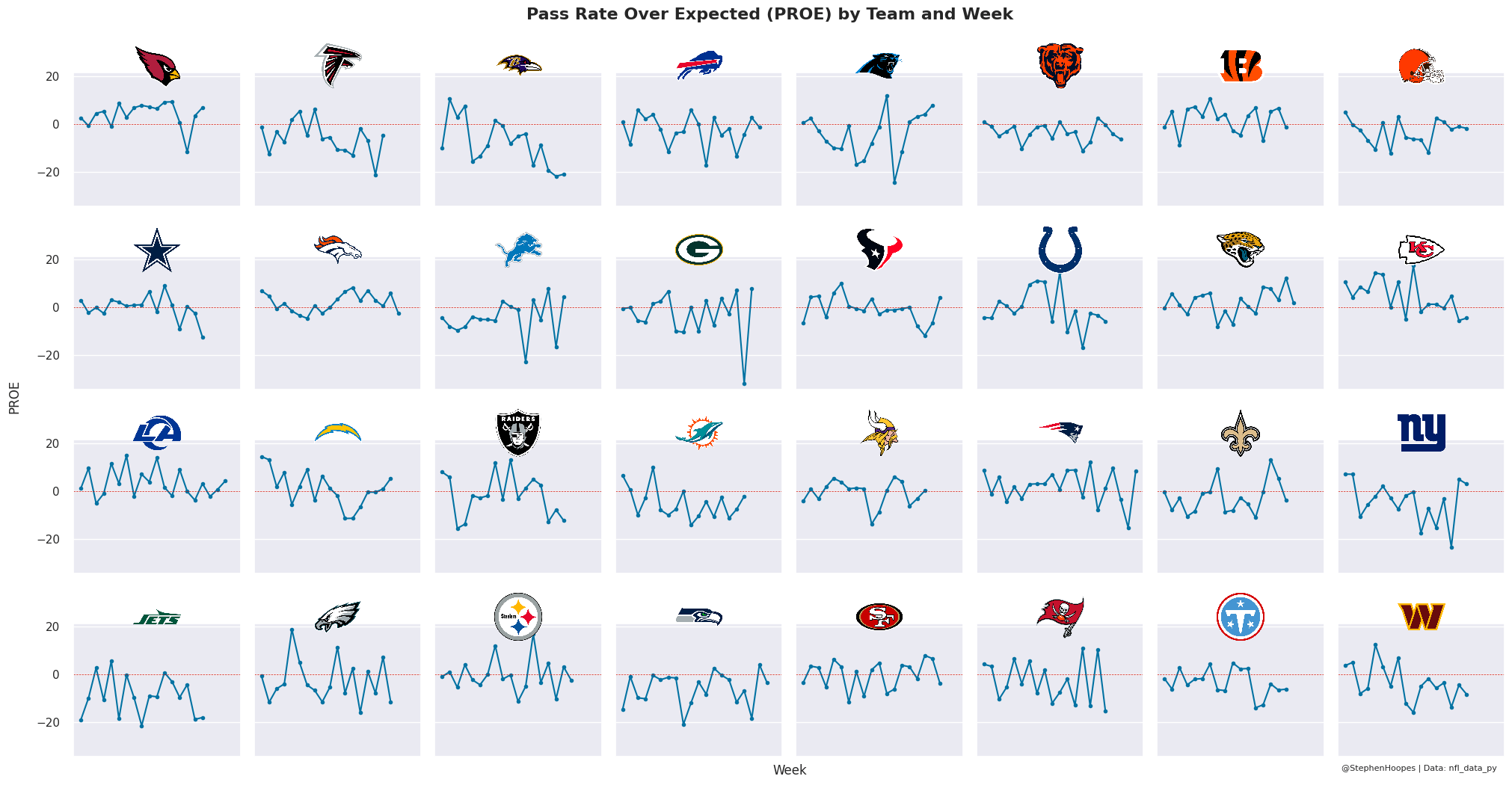
But the Bills did hit a positive PROE in seven games last year. Kincaid was healthy for six of those games. In those six games, Kincaid earned four or more targets in five games (83.3% rate). He managed to do that only 50% of the time in the Bills’ negative PROE games. So, if the Bills are pushed, and the number of routes for the entire offense increases, that provides some optimism that Kincaid can get enough routes to be truly fantasy-relevant. A more difficult schedule would’ve provided more hope for Kincaid. But unfortunately, the Bills have a pretty average schedule in 2026 based on sportsbook forecasted win totals.
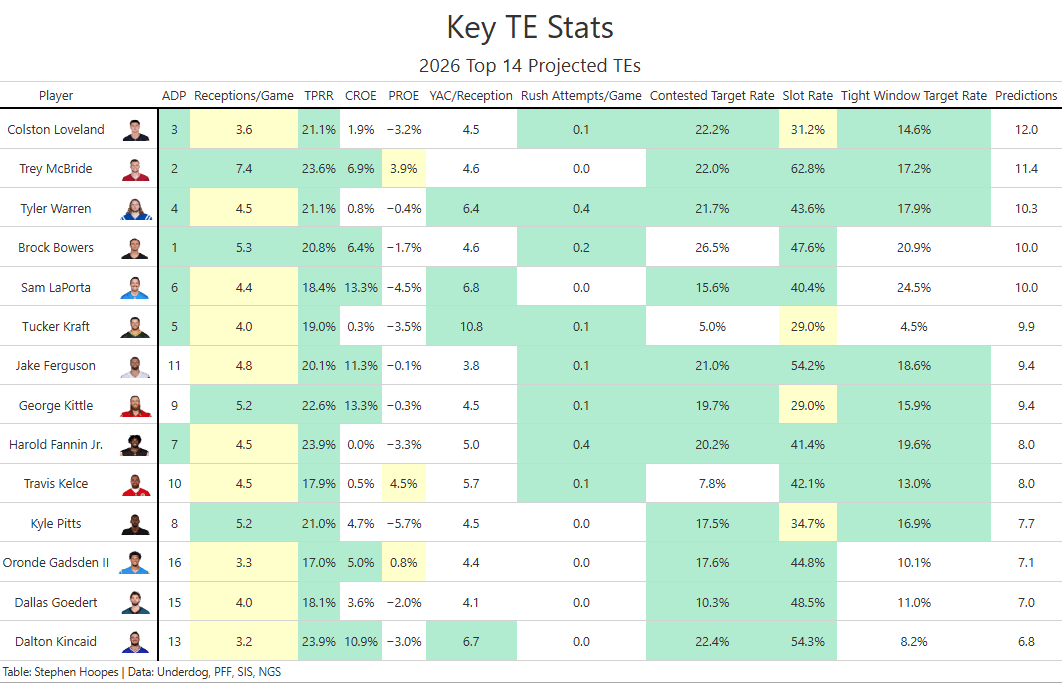
As mentioned, Kincaid is going off the board as TE13, and he landed as TE14 in my analysis. So, I’m fine with Kincaid at his cost, mostly because there is a ceiling here that hasn’t been tapped yet. The most likely outcome is that Kincaid continues to run fewer routes than Knox and earn somewhere between three and six targets in most games. But there are some scenarios, namely a Knox injury or the Bills remembering they have Josh Allen, where Kincaid could help you compete against the teams that opted for an early-round TE. And that’s really what we’re looking for from our late-round TE selections. Give me something to dream on.

Bottom Line
- Dalton Kincaid is an extremely efficient player, ranking in the top four of TPRR, CROE, and YAC per reception last season.
- The issue is, he was 30th among 33 qualifying TEs in routes per game.
- Despite Dawson Knox scraping the bottom of qualifying TEs in TPRR, the Bills opt to give both Kincaid and Knox the same number of routes in 1-TE sets.
- And things get even worse for Kincaid in 2-TE sets.
- But we have some evidence that a Knox injury or the Bills boosting their PROE would significantly raise Kincaid’s ceiling in fantasy.
- And that ceiling is something I’m willing to bet on at Kincaid’s TE13 cost.