Fantasy Football IDP: 2026 Rookie Defensive Line Prospect Preview

 Make us preferred on Google
I'll circle back on these prospects after the draft, when we'll have a clearer understanding of their path to 2026 IDP viability. But for now, I wanted to share my thoughts on who I believe these players are, and what NFL front offices might see as draft day approaches.
More IDP Rookie Previews: Defensive Backs | Linebacker
Now, I don't want to position myself here as a scout. Like you, I'm a football junkie who's fallen in love with defense and IDP over the past few seasons. For this exercise, I combed through scouting reports, stats, and truncated game tape and highlights to help me articulate my thoughts, with the intent of helping readers make rookie draft and dynasty decisions that give them a leg up on their league mates.
Let's dig in.
Edge Rushers
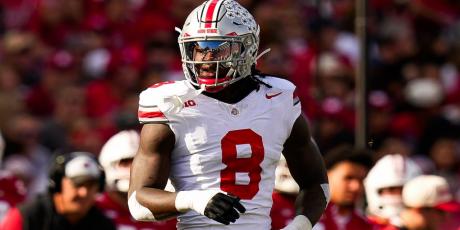
Arvell Reese, LB/EDGE, Ohio State
Arvell Reese is going to test every IDP manager's patience and conviction because we simply don't know what he's going to be at the NFL level. At Ohio State, Reese was primarily deployed as an off-ball linebacker who would creep up as a fifth defender near the line of scrimmage or fire into A-gaps as a blitzer. Per PFF, he logged only 12 true outside pass rushes all season, which makes his stated desire to play as an edge rusher in the NFL all the more fascinating. The versatility is real, but that's both the allure and the frustration. We're projecting a role that doesn't yet have a tape comp.
Reese flashes an explosive first step, wins with speed around the corner, and his length creates real problems for opposing tackles. But right now, that production is coming from athleticism, not instinct. He needs time to develop a true pass-rush toolkit before any team can trust him in that role on every down.
Arvell Reese comes in at 6’4, 241lbs with 32.5 inch arms 👀
I wouldn’t be surprised if he packs on 10-15lbs and plays edge in the NFL pic.twitter.com/SQTNxNdDzr
— NFL Draft Files (@NFL_DF) February 26, 2026
That's the concern baked into his draft stock. If Reese remains a hybrid chess piece, his IDP value could be volatile but explosive; if he sticks to one role, his fantasy floor and ceiling get defined in entirely different ways.
Dane Brugler at The Athletic comps him to a young Micah Parsons, or last year's hybrid linebacker/edge Jalon Walker, which tells you everything about the range of outcomes here. Reese is going to hear his name called early (he's the current betting favorite to go second overall), and that draft capital alone insulates his fantasy value. Even if the role takes time to crystallize, teams don't invest that kind of pick in a player they don't plan to feature. For IDP purposes, Reese is the rare prospect who might not be the overall EDGE1 in rookie drafts but could easily end up as the most valuable defender from this class three years from now. We just have to wait and see what he actually is.
David Bailey, EDGE, Texas Tech
After three quietly productive years at Stanford, the 22-year-old transferred to Texas Tech and absolutely exploded in 2025. Bailey posted 19.5 tackles for loss, 14.5 sacks, and a 24% pressure rate that led all Power 4 edge rushers. He added 25 quarterback hits for good measure. His 13.5 sacks ranked second nationally and first among power conference players. The honors list reads like a CVS receipt. Bailey was a consensus All-American, Big 12 Defensive Player of the Year, Big 12 Defensive Newcomer of the Year, Big 12 Defensive Lineman of the Year, Lombardi Award finalist, Bednarik Award semifinalist, and Senior Bowl invitee.
At 6'3 ", 250 pounds, Bailey posted a 9.67 Relative Athletic Score and has the frame to add mass and the burst to win around the corner. His pressure rate wasn't a product of scheme or cleanup sacks. Bailey consistently beat tackles one-on-one with a blend of speed, power, and relentless motor.
David Bailey is a highly explosive edge rusher with an elite production profile
Fully expect him to be a top 10 pick pic.twitter.com/RVRbONYE2P
— NFL Draft Files (@NFL_DF) January 27, 2026
The IDP catch, as always, is the tackle floor. Bailey averaged just 3.7 tackles per game, which puts him below average among drafted edge rushers and raises legitimate questions about his every-down viability, especially in Year 1. His weakness right now is his play against the run, and that could get him subbed out on early downs. That makes him considerably more appealing in big-play scoring formats or sack-heavy leagues where his 14.5-sack ceiling matters more than his tackle volume.
He's going to be a rotational difference-maker as a rookie, not a three-down anchor, and his fantasy value will fluctuate week to week based on whether he gets home. But the pass-rush juice is real, and in the right scheme with the right coaching, Bailey has the tools to develop into a double-digit sack artist who makes IDP managers forget about the quiet tackle weeks.
Rueben Bain Jr., EDGE, Miami
The draft conversation around Rueben Bain Jr. is going to be maddening between now and April, because his body type simply doesn't fit a single box. At around 265 pounds with sub-31-inch arms, he's undersized for a traditional edge alignment but too explosive to move inside full-time. The answer is probably a hybrid role where he lines up on the edge as his base but kicks inside against guards on obvious passing downs. That kind of usage plays directly to his strengths. Bain's quickness and power, which give tackles problems, will create even more chaos against guards who aren't used to defending that kind of athlete on the interior.
Rueben Bain Jr. run defense pic.twitter.com/ChUAwBahI8
— James Foster (@NoFlagsFilm) February 11, 2026
Ignore the arm-length concerns and just watch the production. Despite the physical limitations that will dominate pre-draft coverage, Bain easily led all Power 4 edge rushers with 75 quarterback hurries while posting the second-best win rate (24%) among his peers. Per PFF, his 86.5 run-defense grade is a 92nd percentile mark, which separates him from the one-dimensional pass-rush specialists in this class and raises his IDP floor.
For IDP purposes, even if he's never a true every-down edge, his ability to win from multiple alignments will keep him on the field in passing situations, and his run-defense chops should prevent him from being a pure sub-package liability. He might not be the first edge rusher off the board in rookie drafts, but he's got a legitimate chance to be the most productive one in the first three years. In big-play scoring formats, Bain is going to be a priority target.
Keldric Faulk, EDGE, Auburn
Keldric Faulk is going to be one of the more divisive edge rushers in this class because his tape tells two different stories depending on whether you're watching the run or the pass. At 6'6 ", 270 pounds with long arms, he's an impressive athlete with experience lining up all over the defensive line.
The raw numbers don't tell a great story right now. An 11% win rate on all pass rushes is concerning on the surface, and his career pass-rush grade ranking in the bottom 25th percentile is a legitimate red flag for his IDP ceiling. But context matters, and it matters a lot here. Auburn lined him up everywhere, including interior looks at 2-tech through 4-tech on roughly 30% of his snaps, a role far less conducive to pass-rush production than his previous edge-heavy deployment. His 2025 junior season stats (two sacks, 29 tackles through three games) look like a step backward, but that usage shift explains the dip. But his run defense is already at an NFL-caliber level. Over three seasons, Faulk recorded 62 run stops, the highest among all FBS edge defenders.
The Mykel Williams comp from last year's class is apt. Both are young, traits-based edge defenders whose production lagged their potential, but there are clear projectable skills on the tape. For IDP purposes, he's a developmental stash with a high ceiling and a low floor. He's the kind of prospect who could be a three-down difference-maker by Year 3 or a rotational tweener who never quite puts it together. In tackle-heavy formats, his run-defense chops give him a safer floor than the pass-rush specialists. In big-play leagues, you're betting on the traits and hoping the technique catches up.
Akheem Mesidor, EDGE, Miami
Akheem Mesidor is going to be the prospect that divides rooms, because the age and injury concerns are real, but the 2025 tape is top-tier. After several years of flash plays, the "Super Senior" put it all together and made significant strides with his pass-rush instincts. Working under the tutelage of Hall of Famer Jason Taylor, Mesidor exploded for 63 total tackles, 17.5 tackles for loss, and 12.5 sacks while forcing four fumbles and earning First-Team All-ACC and Second-Team All-America honors.
Mesidor will turn 25 before the season begins, which shortens his developmental timeline and means that teams are essentially using premium draft picks on a player who is closer to his ceiling than most rookies. Also, his build lacks the length that NFL scouts prefer for the position. Additionally, the foot injuries that troubled him during his college career add another layer of risk, even though he appeared healthy and dominant throughout Miami's playoff run.
For IDP purposes, Mesidor profiles as a player who can contribute immediately and doesn't need a development year. When you watch him work against quality tackles, you see a rusher who wins with technique and effort rather than just raw athleticism. That combination tends to translate well at the next level, where pure speed becomes less of a differentiator and technical proficiency matters more. In redraft leagues, he's the kind of rookie who could outperform his draft slot because he's walking in ready to play. In dynasty, the age cap is real and should suppress his value relative to the 20-year-olds with similar traits. But if you're competing now and need immediate edge production, Mesidor is the rare rookie who can actually deliver it.
Cashius Howell, EDGE, Texas A&M
11.5 sacks and 41 pressures against SEC offensive lines were not an illusion, but the Scouting Combine in Indianapolis changed the calculus on Cashius Howell. The 30 1/4-inch arms and 74 1/4-inch wingspan are historically short measurements for an edge rusher, and they're the kind of numbers that can keep a good player out of the first round at this position. The film is really good, though. Howell has elite get-off speed, legitimate bend, and three straight years of production against increasingly difficult competition. The NFL covets dynamic space-eating athletes, and Howell brings a ton of juice off the edge.
Beyond his concerning Combine measurements, he's not very productive against the run, which limits him to a more specialist pass-rush role at the next level. His development in defending the run game will ultimately determine his pro ceiling and his every-down viability for us IDP'ers. For now, he profiles as a situational pressure player who can be effective right away in that capacity.
In IDP leagues that reward sacks and big plays, that's a useful archetype. In tackle-heavy formats, the limited role will cap his weekly floor. If he lands in a scheme that lets him pin his ears back and hunt quarterbacks on third down, he could outperform his draft slot as a rookie. He's the kind of traits-based dart throw that looks brilliant if it hits and gets overanalyzed if it doesn't. For IDP managers, the value will come down to cost. In the right range, he's worth the swing, but his arrow is pointing down, which might impact his draft capital.
T.J. Parker, EDGE, Clemson
T.J. Parker finished his sophomore year as the only player in the nation ranking in the top ten in forced fumbles, tackles for loss, and sacks. The junior season saw a dip in production, with five sacks over 12 games, but the 2025 tape could provide more valuable insight for NFL evaluators than his impressive 2024 stats. He faced more attention, more chips, more scheme adjustments designed to neutralize him, and he didn't always have answers. His rush menu needs to grow beyond the long arms and bull rush because the tackles he'll face on Sundays are going to know exactly what's coming. How he develops his setup and secondary rush will determine his pro ceiling.
For IDP purposes, he has a floor. He's going to play, he's going to set the edge, and he's going to generate pressure even if the sack numbers fluctuate. The ceiling depends entirely on whether he can diversify that pass-rush approach and start winning with more than just brute force. If he does, he's a future double-digit sack guy. If he doesn't, he's a solid but unspectacular every-down end who gives you tackle volume and the occasional cleanup sack. In a class full of traits-based swings and hybrid projects, Parker's floor-up profile has real appeal, especially in tackle-heavy formats that reward players who stay on the field.
Zion Young, EDGE, Missouri
Zion Young is built like someone ordered a prototype edge rusher from a catalog and actually received exactly what was pictured. Young is 6'5" with long arms, and his run defense is the calling card here. He plays with a nasty streak, finishing through contact and bringing a physical temperament that a team in the first round will covet.
In passing situations, the ceiling question with Young comes down entirely to explosiveness. If an NFL strength program can unlock a quicker first step, you're looking at a legitimate every-down starter who can pile up pressure numbers and anchor one side of the defensive line for years. If the burst never develops, he's still a plus run defender who gives you 6-8 sacks a year and holds the edge against the run. That's a useful player, just not a fantasy difference-maker.
For IDP purposes, Young's floor is safe in tackle-heavy formats because his run-defense chops will keep him on the field. The ceiling is what makes him interesting in the late first or early second round of rookie drafts.
Malachi Lawrence, EDGE, UCF
Malachi Lawrence is a flag-plant guy for me, but it sounds like I'm not alone because he's suddenly getting a lot of first-round buzz.
The only P4 EDGE rushers since 2015 with an RAS > 9.40 and at least one college season with a pressure rate > 17.0% and a win rate in true pass sets > 27.50%..
🔘 Myles Garrett, Texas A&M
🔘 Dani Dennis-Sutton, Penn. State
🔘 Malachi Lawrence, UCF
🔘 Aidan Hutchinson, Michigan… pic.twitter.com/2MXZVpDfFM— Adam Carter (@impactfbdata) February 28, 2026
The athletic traits back up the technique. In 2025, he put it all together with career highs of 11 tackles for loss, seven sacks, two forced fumbles, and three pass breakups, earning First Team All-Big 12 recognition.
The reality check for Year One, though, is that Lawrence profiles as a nickel and dime package rusher, similar to how the Falcons used James Pearce Jr. in the first half of 2025. His game is advanced, but his frame and play strength against the run will need time to catch up to NFL physicality. That's fine for IDP purposes as long as you're not expecting every-down volume, but there's a chance that he comes off the board in Round 1 or early in Round 2 of April's draft. That sort of draft capital is intriguing. In big-play scoring formats, he's the kind of rotational specialist who can give you spike weeks when he gets home. In tackle-heavy leagues, the limited snaps will cap his floor. But the toolkit is real, the production jumped against better competition, and the motor never quits. Lawrence is the kind of prospect who makes a living on third down for a few years before forcing his way into a larger role.
Other edge rushers I expect to go in the top 3 rounds:
-Romello Height, Texas Tech
-Derrick Moore, Michigan
-Joshua Josephs, Tennessee
-R. Mason Thomas, Oklahoma
-Dani Dennis-Sutton, Penn St.
-Gabe Jacas, Illinois
-LT Overton, Alabama
Defensive Tackles
Caleb Banks, DT, Florida
This isn't a particularly deep DT class, but there are a few good ones, starting with Caleb Banks. At 6-foot-6 and 335 pounds, with 35-inch arms, Banks moves like someone who's far less physically imposing. Watch the tape from his LSU and Ole Miss games in 2024, and you'll see a player who can absolutely wreck an offensive game plan when everything clicks. Banks generated 14 quarterback pressures across those two weeks, but the problem is that those performances remain the exception rather than the rule. He flashes dominant and then goes quiet, leaving evaluators wondering which version will show up at the next level.
The 2025 season is mostly a write-off after an injury cost him most of the year, which means teams are projecting off 2024 tape and a strong Senior Bowl week where he got better and better as practices went on. Banks is the definition of a boom-or-bust prospect. Whoever drafts him is betting on ceiling over floor, and that's not necessarily a bad wager. The boom scenario sees Banks putting together his physical tools with refined technique, becoming a game-wrecking force who collapses pockets and demands constant double-teams. The bust scenario sees the technical flaws never getting corrected, leaving teams with an oversized athlete who flashes without ever producing consistently.
For IDP purposes, that makes him a pure dynasty stash with a multi-year timeline. In tackle-heavy formats, the interior alignment gives him a decent floor if he earns snaps. In big-play leagues, you're betting on the physical traits and hoping the consistency catches up. He's the kind of player who could be a league-winner in three years or a roster clogger you cut after two. The tools are worth the swing.
Peter Woods, DT, Clemson
There is a version of Peter Woods who becomes a game-wrecking interior force with double-digit sacks, and there is a version who continues to tease with flashes while never putting together a complete season. The talent says first-round pick without hesitation. However, his 2025 season was disappointing compared to 2024; his pressures dropped from 20 to 14, tackles for loss fell from 8.5 to 3.5, and sacks decreased from 3.0 to 2.0. With an 8.3% pass rush win rate and a subpar 9% pressure rate, he struggles to make quick impacts. His tape shows a player who can dominate but hasn't yet mastered consistency. While he may excel against elite competition, he can become invisible for long stretches.
Despite this, Woods is expected to go in the middle of the first round, which could create optimism in IDP leagues. Teams don't invest heavily in players they don't plan to use extensively, and Woods' athleticism offers a chance for three-down work if he develops. For IDP purposes, he's a risk for Year 2 or 3 rather than an immediate contributor. He'll likely be a top defensive tackle in rookie drafts, but his selection will be more about positional need than his readiness. Expect him around the fifth round in DT-required formats as a developmental player with significant upside. Just don't rely on him to lead your line in Year 1.
Kayden McDonald, DT, Ohio State
Kayden McDonald, the 6'3", 326-pound nose tackle, is at his best as a run-stuffer, and not just a space-eater who occupies blockers. He murders centers and guards in the run game with extreme power, violence, and great leverage. He has a nose for the ball through all that trash at the line, making him an impact run defender who could be one of the very best nose tackles in the NFL as a strict two-down player.
The question with McDonald is whether his pass rush can develop enough to keep him on the field for three downs. For IDP purposes, McDonald profiles as a scheme-specific asset with a clear floor and a capped ceiling. In tackle-heavy formats, his run-stuffing chops will generate consistent if unspectacular tackle numbers as long as he's on the field. In big-play leagues, the lack of pass-rush juice limits his appeal. He'll likely be a Day 2 pick, with a chance to go in the late first, who starts immediately on early downs, and that's valuable. But expecting him to develop into an every-down difference-maker for IDP gamers is betting on a pass-rush transformation that may never come.

Other defensive tackles I expect to go in the top 3 rounds:
- Christen Miller, Georgia
- Lee Hunter, Texas Tech
- Domonique Orange, Iowa State
- Dontay Corleone, Cincinnati
- Darrell Jackson Jr., Florida State